Pad Slapping: The Cheap Brake Job That Costs You Twice
Somebody quotes you a brake job for noticeably less than everyone else. The pads go on, the noise stops, you drive away happy. Eight months later the noise is back, the pedal pulses, and the second quote is bigger than the first one would have been.
That is pad slapping. New friction material bolted onto a brake system nobody measured.
Why the pads were never the whole job
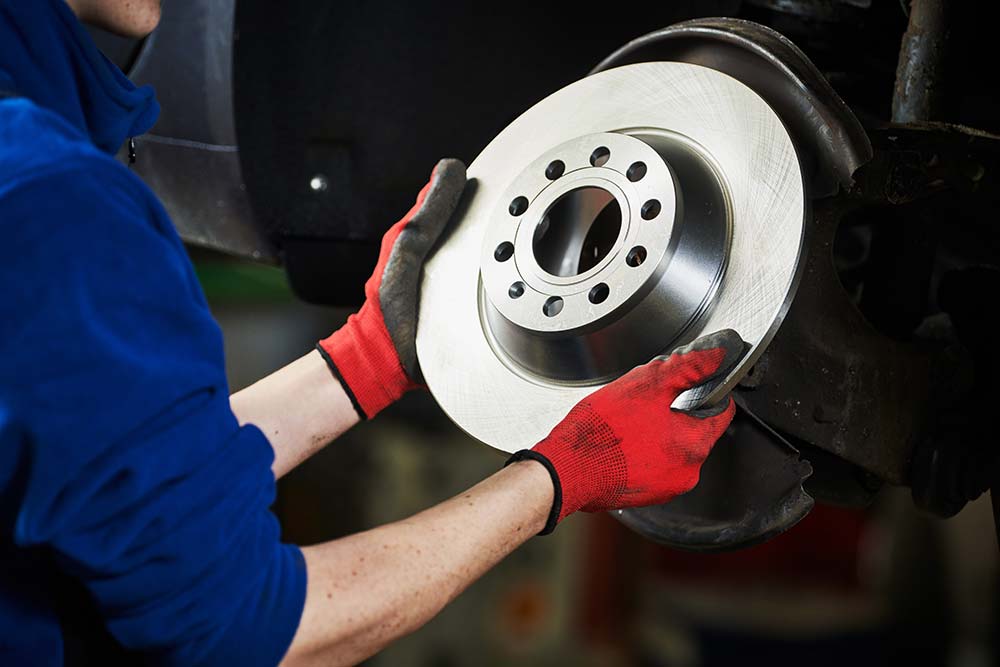
Pads are the part that wears out, so it is easy to assume they are the part that needs replacing. But a pad only works if the surface it presses against is flat and the caliper that squeezes it can move freely. Change one and ignore the other two, and the new pads inherit every problem the old ones had.
There are three things that have to be right.
The rotor has to be thick enough and flat enough. Every rotor has a minimum thickness stamped on it by the manufacturer. Below that it cannot shed heat properly, and a rotor that cannot shed heat warps. If your old pads wore down to the backing plate, the steel has been cutting grooves into that surface. New pads will not seat flat against a grooved rotor. They will contact it in patches, wear unevenly, and start making noise within months.
The caliper has to move. A brake caliper floats on slide pins so it can centre itself over the rotor. Those pins live in a wheel well, in Kansas, through salted winters and gravel road dust. In time they seize. A seized caliper holds one pad against the rotor permanently, which is how you get one wheel wearing out three times faster than the other, a hot wheel after a short drive, and a burning smell in the parking lot.
The fluid has to be in reasonable condition. Brake fluid absorbs water out of the air over the years. Water boils at a temperature brake fluid does not, and when it boils you get vapour in the line. Vapour compresses where liquid does not. That is a pedal that goes soft halfway down a long hill, which is exactly when you want the opposite.
What measuring actually involves
It is not dramatic. It is a technician with a micrometer and ten minutes.
We measure pad thickness at all four corners, not just the one making noise. We measure rotor thickness against the manufacturer’s minimum and check it for runout. We pull the slide pins to confirm they move and are not dry or corroded. We look at the flexible hoses for cracking and swelling, because a hose that has swollen internally acts like a one-way valve and drags a brake on. And we check the fluid.
Then we tell you what we found. Sometimes the answer is that the rotors are fine and pads alone are the right call, and we will say so rather than selling you parts. What we will not do is guess, because a guess on brakes is not a cheap thing to be wrong about.
The arithmetic
The reason pad slapping survives is that it looks cheaper on the day. Pads are the inexpensive part. Skipping the measurement saves labour time. The quote comes in low and wins the job.
What it costs you is the second visit. The one where the rotors are now definitely below minimum because they have been ground on for another eight months, the caliper that was seized has cooked a wheel bearing, and you are paying for pads again on top of all of it.
A brake job done once is cheaper than a brake job done twice, and it is a long way cheaper than finding out on a wet road that your stopping distance grew while you were not paying attention.
If your brakes are telling you something
A squeal that comes and goes is usually the wear indicator, a small metal tab built into the pad specifically to make that noise. That is the warning shot, and it is the cheapest moment to act.
Grinding means the warning has been going for a while and the friction material is gone. At that point you are cutting into the rotor every time you slow down, and it is worth coming in today rather than at the weekend.
A pedal that feels soft, a steering wheel that shakes when you brake from highway speed, or a car that pulls to one side under braking are all worth a look regardless of noise.
Our brake work carries the NAPA nationwide warranty, good for 24 months or 24,000 miles at over 17,000 shops across the country. We would rather it never got used.
Call or text (620) 416-0008. Describe the noise. We'll do the rest.
We answer texts the same day we get them.