What a Kansas Winter Does to Your Vehicle
Winter has a reputation for breaking cars. What it mostly does is find the things that were already marginal and push them over.
A battery that was weak in October is a battery that will not start the truck in January. A tire with not much tread left was adequate on dry pavement and is not adequate on the packed snow at the end of your driveway. Nothing new went wrong. The margin just disappeared.
Which is useful, because it means the list of things worth checking is short and specific.
Your battery loses most of its power
This is the big one and the numbers are worse than people expect. A battery that is fully charged loses roughly a third of its available cranking power at freezing, and around half of it at zero.
At the same time, the engine is asking for more. Cold oil is thicker, so the starter is turning a stiffer engine. So you have a battery with half its strength trying to do a harder job.
A battery that has been quietly failing all year will get away with it right up until the first genuinely cold morning. This is why the shop phone rings all day after the first hard freeze — those batteries did not fail overnight, they failed in slow motion and the cold simply collected on the debt.
A load test takes five minutes and tells you where you stand. Worth doing in November rather than finding out in the church parking lot.
Tire pressure drops on its own
Air contracts as it cools. For every ten degrees the temperature falls, your tires lose roughly one PSI. A Kansas cold snap that takes you from sixty degrees to ten will take about five PSI out of every tire without a single leak.
Underinflated tires have less grip, wear out at the shoulders, and cost you fuel. Check pressures when the vehicle has been sitting overnight, not after driving, because driving warms them and gives you a falsely high reading.
If your TPMS light comes on during the first cold week of the year, that is usually what it is telling you. Do not just reset it.
Tread depth matters more than it did in July
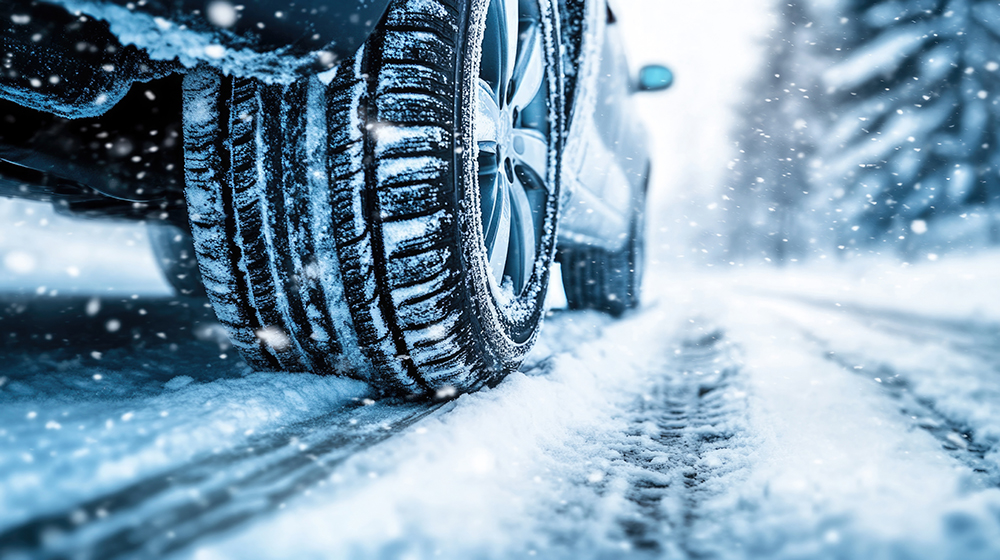
On dry pavement, a tire with four thirty-seconds of tread stops respectably. On snow it is a different tire entirely, because the tread depth is what gives the snow somewhere to go. Once the grooves are shallow, the tire packs with snow and then you are effectively driving on smooth rubber over smooth snow.
The penny test tells you whether you are legal. It does not tell you whether you are comfortable driving to Marion in February. Those are different thresholds.
Fluids and the things that freeze
Coolant is the one that actually matters. It is a mix of antifreeze and water, and if that mix has drifted — usually because somebody topped it up with plain water over the years — its freezing point rises. Coolant that freezes expands, and expanding ice inside an engine block cracks it. That is not a repair anybody wants.
Testing the mix takes moments.
Washer fluid is a smaller problem with a bigger nuisance factor. Summer fluid freezes in the lines and sometimes splits the reservoir, and you find out the first time a truck throws slush across your windshield on a two-lane road.
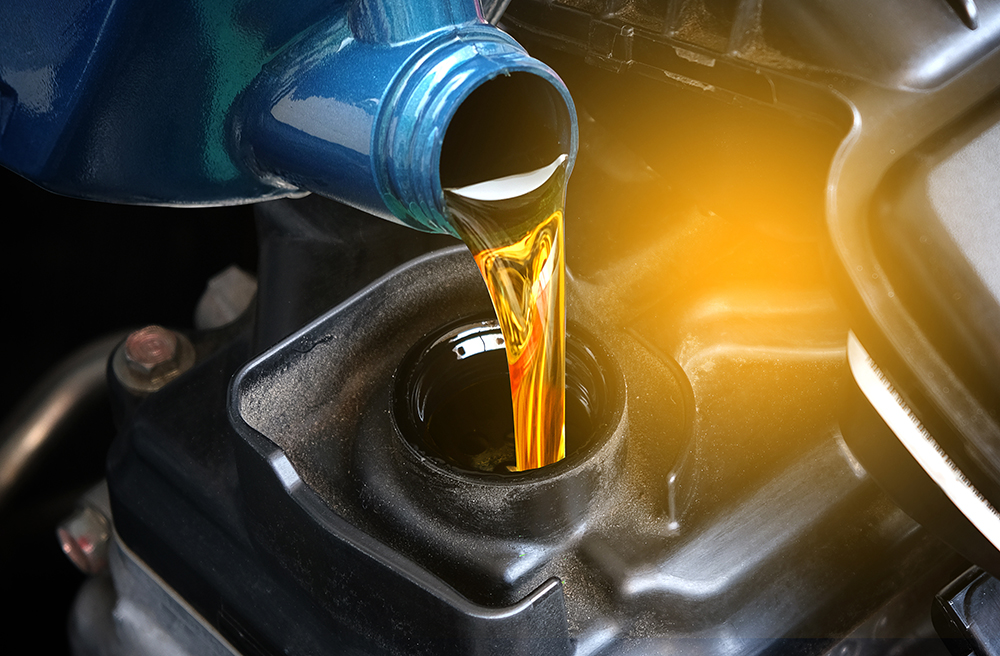
Oil thickens in the cold, which is why the right viscosity matters. Modern synthetic flows far better at low temperature than conventional oil, and most engine wear happens in the first seconds after a cold start.
Glass is more fragile than you think
A chip in your windshield that has sat there harmlessly since August will often crack across the glass on the first cold morning — and usually not because of the cold alone, but because somebody aimed the defroster at it on full heat while the outside was still below freezing. That temperature difference across the glass is what spreads the crack.
If you have a chip, get it filled before winter. It is a short job while it is small, and it is a windshield if you leave it.
Same reasoning applies to wiper blades. Rubber that has spent a Kansas summer baking is already hard, and ice will finish it.
The short version
Battery tested, tire pressures set, tread checked, coolant mix confirmed, chips filled, wipers replaced. That is most of it, and none of it is expensive or dramatic.
The point of doing it in November is that all of those are cheap, planned jobs in November and expensive, unplanned ones in January.
Call or text (620) 416-0008. Describe the noise. We'll do the rest.
We answer texts the same day we get them.